Power Nap: How Long, When and How to Wake Up Refreshed
How long should a power nap be? The ideal length, the best time of day, how to fall asleep fast and wake up without grogginess, based on sleep research.
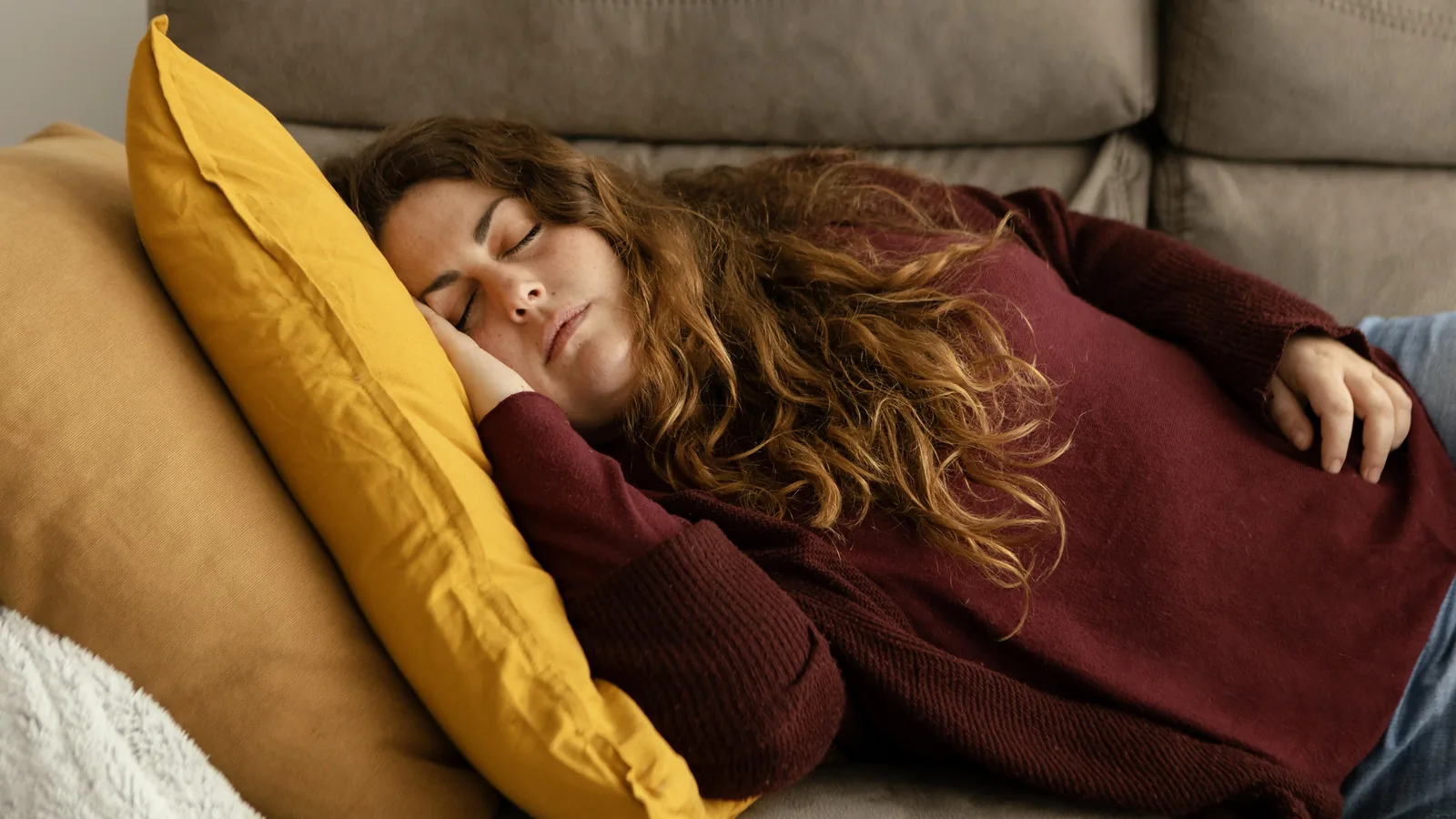
A good power nap lasts about 10 to 20 minutes and happens in the early afternoon, before 3 p.m. That's long enough to take the edge off sleepiness and short enough to wake up clear instead of groggy. Below: what sleep research says about length and timing, how to drift off and wake up well, and a 20-minute plan to try today.
Key takeaways
- A nap of 10 to 20 minutes gives the quickest lift.
- Naps of 30 minutes or more can leave you groggy at first. This sleep inertia often fades within about 35 minutes.
- Early afternoon is the best time to nap. After 3 p.m., a nap can make it harder to sleep at night.
- A dark, quiet, cool spot and one alarm do most of the work.
- If you need naps more than usual, or feel sleepy after a full night in bed, talk to a doctor.
What is a power nap?
"Power nap" is everyday language for a short, planned daytime sleep. The brief naps that refresh people fastest last about 5 to 15 minutes. According to a review by Lovato and Lack, their benefits show up almost immediately and last about one to three hours.
Mayo Clinic lists the benefits of napping for healthy adults: relaxation, less tiredness, more alertness, a better mood and improved performance, including quicker reaction time and better memory.
A review by Milner and Cote shows that nap length, time of day, age and napping experience all shape the benefits. Regular nappers also seem to benefit more than people who rarely nap, so if your first try feels strange, give it a few days.
A power nap tops up night sleep; it doesn't replace it. The CDC recommends 7 or more hours a night for adults aged 18 to 60. And if you need a different kind of rest, like quiet or a break from people, see the many ways to rest.
How long should a power nap be?
The short answer: 10 to 20 minutes of sleep, and no more than 30 minutes as a habit. Mayo Clinic calls a 20- to 30-minute nap ideal and warns that the longer you nap, the more likely you are to feel groggy.
The best-known comparison comes from Flinders University in Australia. Brooks and Lack had 24 healthy young adults sleep about 5 hours at night. The next day at 3 p.m., they napped for exactly 5, 10, 20 or 30 minutes of sleep, or not at all.
5 and 10 minutes
The 5-minute nap did little. The 10-minute nap was the winner: it improved sleepiness, fatigue, vigor and mental performance right away, and some gains lasted up to 155 minutes.
20 minutes
Also good, just slower. The improvements appeared about 35 minutes after waking and lasted up to 125 minutes.
30 minutes
People got worse before they got better. Alertness and performance dipped right after waking, a sign of sleep inertia, then improved for up to 155 minutes.
60 to 90 minutes
In a Harvard study by Mednick and colleagues, naps of 60 to 90 minutes with deep sleep and REM sleep helped people learn a visual task about as much as a full night of sleep. But naps over 30 minutes can start with grogginess, and Mayo Clinic notes that some research links naps over an hour a day with higher risks of high blood pressure, diabetes and heart disease. A link isn't proof of cause, but it's a reason to keep everyday naps short.
Note that these are minutes asleep, so give your alarm a few extra minutes.
What is the best time to nap?
Early afternoon. Mayo Clinic says napping after 3 p.m. can make it harder to sleep soundly at night. The American Heart Association agrees: mid-afternoon, before 3 p.m. Lovato and Lack also found early afternoon to be the most favorable time.
That matches the slump most of us know: bright in the morning, foggy by 2 p.m. In a driving study by Reyner and Horne, sleepiness peaked mid-afternoon. A short nap right after lunch fits there naturally. Mayo Clinic notes that your sleep needs, schedule, age and medicines can shift your best time.
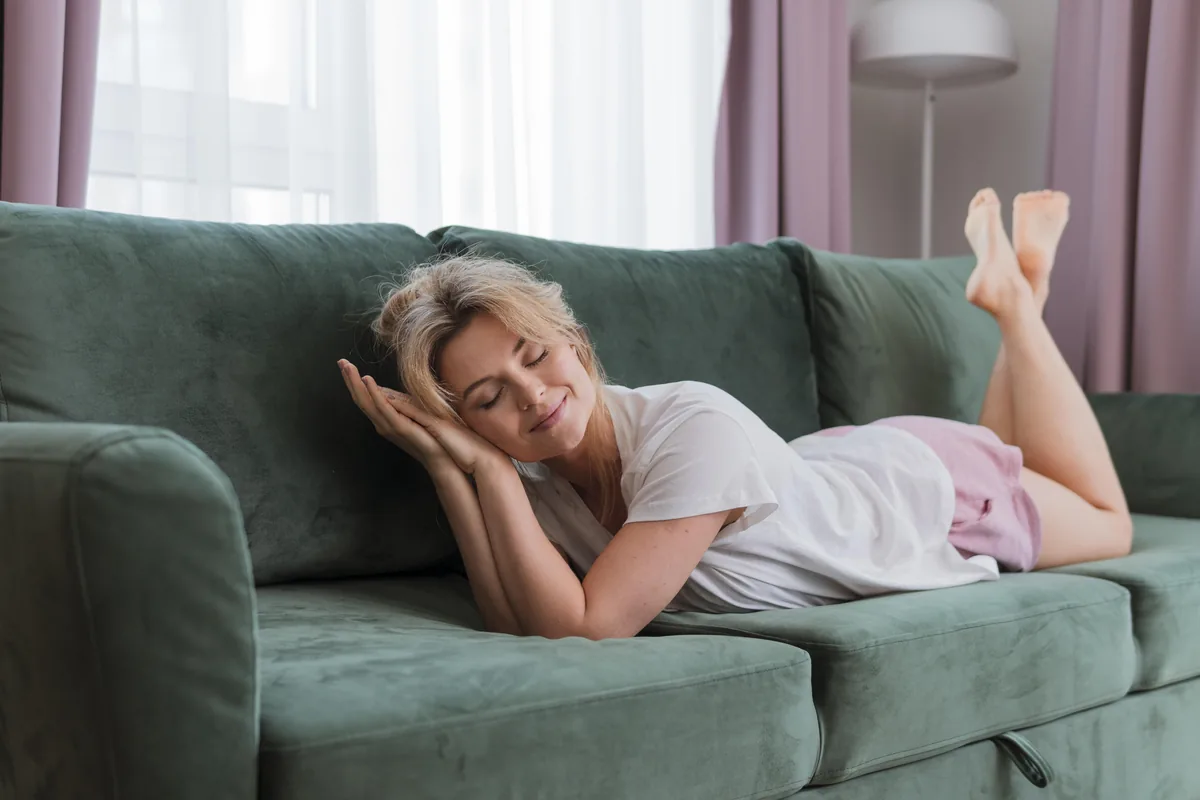
A 20-minute power nap plan you can try today
This plan keeps your sleep well under the 30-minute mark, where grogginess gets more likely.
- Pick your slot. Choose a time between lunch and 3 p.m. and put it on your calendar, as the American Heart Association suggests.
- Set up the spot. Quiet, dark and comfortably cool. Silence your phone and put it out of reach.
- Set one alarm for 20 minutes. Start it when you lie down. That leaves a few minutes to drift off and wakes you before 30. Skip the snooze button.
- Let go. Lie down or recline, close your eyes and breathe slowly. If your mind races, that's fine.
- Wake up on purpose. When the alarm rings, sit up right away. Step into daylight, splash cold water on your face and drink a glass of water.
- Ease back in. Mayo Clinic advises giving yourself time to wake up before tasks that need a quick or sharp response. Start with something easy.
Try it for a week before you judge it.
How do you fall asleep fast for a nap?
You can't force sleep, but you can make it easy.
- Make it dark and quiet. Close the blinds or wear an eye mask. Earplugs or soft noise help in a busy home or office.
- Keep it cool and calm. Mayo Clinic suggests a comfortable room temperature and few distractions, like screens. A sofa or a reclined car seat beats sitting upright.
- Lower the stakes. In the Reyner and Horne study, naps that were only "nonsleep dozing" still worked. Lying still with your eyes closed isn't wasted time.
How do you avoid post-nap grogginess?
That heavy, confused feeling after a nap is sleep inertia. Mayo Clinic says it often goes away within about 35 minutes. Your best prevention is length: naps under 30 minutes are less likely to leave you groggy.
What you do right after waking helps too. In a small Japanese study, Hayashi and colleagues had 10 young adults take a 20-minute nap at 12:40 p.m. Washing their faces right after waking eased sleepiness, though only mildly and briefly. A minute of bright light right after the nap worked about as well as caffeine before it for sleepiness, though not for performance.
What about a coffee nap?
A coffee nap means drinking coffee right before a short nap. The American Heart Association explains the logic: caffeine takes time to kick in, so it's likely to start working right as you wake up.
In the Reyner and Horne study, 12 sleepy people took caffeine and a short nap during a 30-minute break before a two-hour afternoon drive in a simulator. Driving incidents fell to 9% of the placebo level, versus 34% with caffeine alone. In the Hayashi study, caffeine followed by a nap worked best for both sleepiness and performance.
Skip it if caffeine makes you jittery or disturbs your night sleep. And if you ever feel sleepy behind the wheel, pull over somewhere safe.
When is a nap not the answer?
A nap helps with ordinary afternoon tiredness, not a bigger problem. Talk to a doctor if:
- You need naps more than usual. Mayo Clinic says this matters even more if you feel tired after waking up in the morning, since a medicine, a sleep disorder or another health condition can disturb night sleep.
- You feel sleepy even after enough sleep. The CDC lists this as a sign of poor sleep quality.
- Someone mentions your snoring. The NHLBI lists frequent loud snoring, breathing that starts and stops, and daytime sleepiness among the symptoms of sleep apnea.
- You struggle to sleep at night. Mayo Clinic notes that naps might make trouble falling or staying asleep worse.
These aren't diagnoses, just good reasons to get checked.
No time to nap? Quiet-rest alternatives
No quiet room, no time, or a brain that won't switch off? Eyes-open rest still counts. A few options that fit in ten minutes:
- Close your eyes for five minutes at your desk or in a parked car.
- Take a short walk, ideally outside in daylight.
- Breathe slowly, in for about four counts and out for about six.
- Play one calm puzzle level that ends on its own.
For more ideas, try these one-minute mental resets or our guide to better breaks during the workday.
Our game, Munchy Ants, was made for exactly this kind of short pause. It's a calm, no-timer color puzzle where ants eat a pixel-art picture made of sugar cubes, and it's free to play on iPhone and Android. You tap a box and a line of ants marches out to munch the picture. The levels are short and the music is cozy.

Munchy Ants
A calm color puzzle with no timer. Play at your own pace. Free to play.
Frequently asked questions
How long should a power nap be?
A power nap should be about 10 to 20 minutes of sleep. In a Flinders University study, a 10-minute nap improved alertness right away, while a 30-minute nap caused grogginess first. Mayo Clinic advises against napping more than 30 minutes on a regular basis. Set your alarm a few minutes longer to allow time to fall asleep.
What are the benefits of napping?
Napping can bring relaxation, less tiredness, more alertness, a better mood and improved performance, including quicker reactions and better memory, according to Mayo Clinic. Brief naps work almost immediately, and their effects last about one to three hours. In one Harvard study, longer naps of 60 to 90 minutes also helped people learn a visual task.
What is the best time to take a nap?
The best time to nap is early afternoon, before 3 p.m., when many people hit a natural slump after lunch. Mayo Clinic warns that napping later can make it harder to sleep soundly at night. If you work nights or keep an unusual schedule, your best time may be different, so adjust it to your day.
Is it OK to nap at work?
Napping at work is fine when your workplace allows it and you keep it short. Use your break, find a quiet spot such as an empty room or your parked car, and set an alarm for about 20 minutes. Then give yourself a few minutes to wake up fully before a meeting or any task that needs quick reactions.
Why do I feel worse after a nap?
Feeling worse after a nap is usually sleep inertia, a groggy, heavy feeling that can follow waking up. It's more likely after naps of 30 minutes or longer, and Mayo Clinic says it often fades within about 35 minutes. Shorter naps, daylight and a splash of cold water on your face can help you shake it off.
Sources
- Brooks, A., & Lack, L. (2006). A brief afternoon nap following nocturnal sleep restriction: Which nap duration is most recuperative? Sleep, 29(6), 831-840.
- Lovato, N., & Lack, L. (2010). The effects of napping on cognitive functioning. Progress in Brain Research, 185, 155-166.
- Milner, C. E., & Cote, K. A. (2009). Benefits of napping in healthy adults: Impact of nap length, time of day, age, and experience with napping. Journal of Sleep Research, 18(2), 272-281.
- Mednick, S., Nakayama, K., & Stickgold, R. (2003). Sleep-dependent learning: A nap is as good as a night. Nature Neuroscience, 6(7), 697-698.
- Reyner, L. A., & Horne, J. A. (1997). Suppression of sleepiness in drivers: Combination of caffeine with a short nap. Psychophysiology, 34(6), 721-725.
- Hayashi, M., Masuda, A., & Hori, T. (2003). The alerting effects of caffeine, bright light and face washing after a short daytime nap. Clinical Neurophysiology, 114(12), 2268-2278.
- Mayo Clinic. Napping: Do's and don'ts for healthy adults.
- American Heart Association. Take a nap: The benefits of napping and how to make it work for you.
- Centers for Disease Control and Prevention. About sleep.
- National Heart, Lung, and Blood Institute. Sleep apnea: Symptoms.
- Photos: cover by Freepik, afternoon nap by Freepik.
Munchy Ants
A calm color puzzle with no timer. Play at your own pace. Free to play.
This article is general information, not medical advice. If stress feels overwhelming, talk to a health professional. Written by the Munchy Ants team. See our editorial policy: how we research, check and correct our articles.